 PRADEEP ALBERT
Ensuring the Quality and Safety of Medicinal Mushroom Supplements
An Introduction to Medicinal Mushrooms
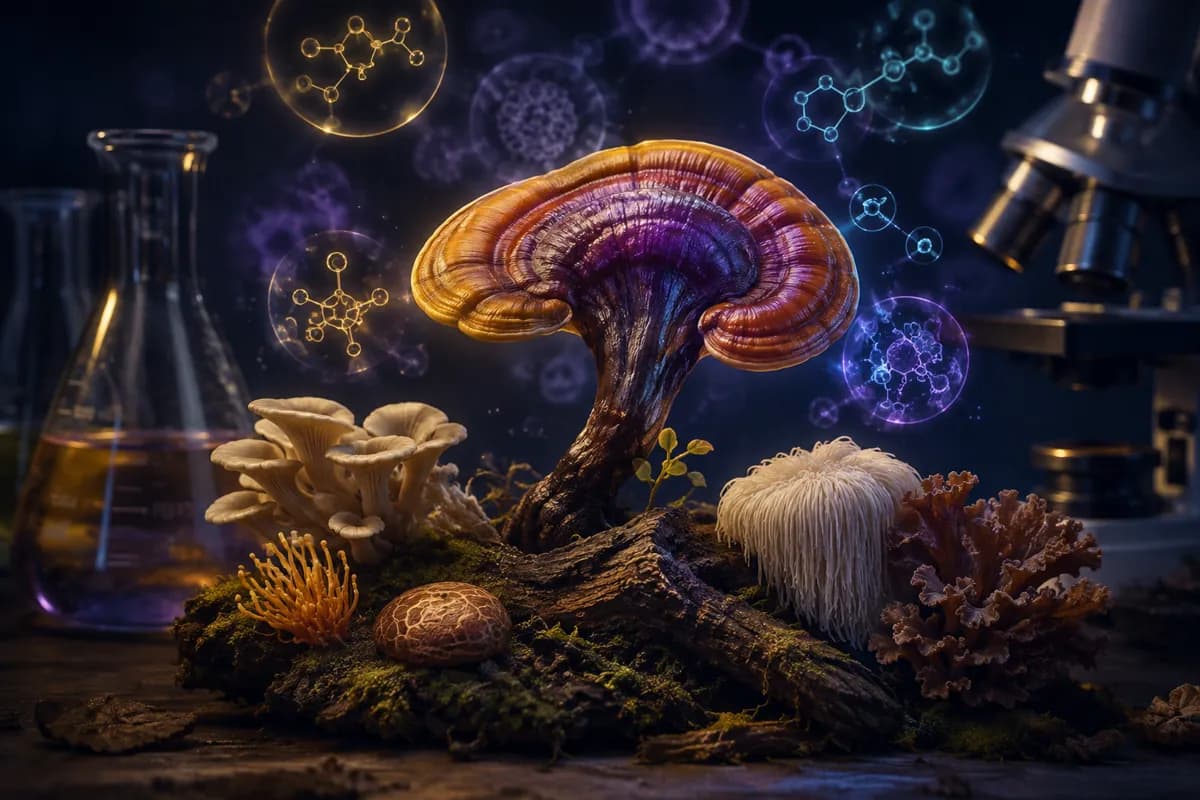
Medicinal mushrooms have been used in traditional Chinese medicine for thousands of years. Unlike regular culinary mushrooms, medicinal varieties contain special compounds that can have therapeutic effects on health and disease. Some of the most well-studied medicinal mushrooms include reishi, shiitake, maitake and cordyceps.
Medicinal mushrooms have a complex life cycle, transitioning from spores to threadlike filaments called mycelium, which make up the main body of the organism. Given the right conditions, the mycelium then fruits into the mature medicinal mushrooms that we recognize. It is primarily the mushroom “fruiting body” that contains the medicinally valuable compounds.
These compounds include complex carbohydrates known as beta-glucans, which comprise up to half of the mushroom cell wall. Beta-glucans are believed to be the primary active constituents imparting the immune-enhancing and potential anti-cancer effects of medicinal mushrooms. However, the exact structure and architecture of the beta-glucans differs between mushroom species, impacting their potency and mechanisms of action.
In addition to beta-glucans, medicinal mushrooms can contain other beneficial bioactive molecules. These include antioxidants like ergosterol and triterpenoids, as well as vitamin D precursors. The specific medicinal compounds produced depend heavily on the mushroom’s growth conditions and substrate, especially the type of wood it grows on.
Medicinal Mushroom Supplement Quality Issues
In recent years, a large number of medicinal mushroom supplements have entered the consumer market, often with impressive health claims. However, according to mycologist Jeff Chilton, the majority of these commercial products do not actually contain genuine mushroom. Instead, they are produced from grain mycelium and residual starch, with minimal beta-glucans or other active mushroom constituents.
This is done primarily for economic reasons. Mushrooms are over 90% water. After dehydrating to create supplements, the dried mushroom powder becomes exceedingly expensive. Companies realized they could cut costs substantially by growing mushroom mycelium on grain instead. But most never removed the grain, meaning the final product is mainly starch.
The front labels of these products are often deliberately misleading, displaying mushroom images with phrasing like “reishi mushroom”. Only in the small print would it say “mycelium”, obscuring the fact that these supplements lack genuine fruiting body.
Compounding the problem, until recently there were no analytical tests to accurately determine medicinal mushroom quality and distinguish myceliated grain from real mushroom powder. Fortunately, new enzymatic assays for fungal beta-glucans have become available over the past decade. When applied by Chilton and others to test commercial nutraceuticals, the results were sobering:
- Most products contained little to no bioactive beta-glucans
- High levels of alpha-glucans were detected, indicating starch
- Ergosterol content was extremely low, confirming minimal mushroom tissue
This suggests the vast majority of mushroom supplements sold today still lack genuine mushroom constituents with biological activity. Without proper analytical verification, it is almost impossible to determine quality from the label alone.
Verifying Genuine Medicinal Mushroom Products
So how can consumers and practitioners identify authentic medicinal mushroom supplements on the market? Here are some warning signs that products likely lack genuine mushroom content:
- Labeled as “Made in USA”
- Very inexpensive relative to other options
- Taste is very bland without typical mushroom flavors
On the other hand, genuine mushroom extracts will clearly state details on the label like the substrate used and concentration ratio. Trustworthy nutraceutical companies should also provide lot-specific assays confirming the presence of expected levels of beta-glucans, ergosterol and other compounds – validated by third party laboratories.
Consumers can even do simple at-home tests, like the iodine starch assay, to further double check for adulteration with grain fillers. While not definitive, unexpected positive results would indicate issues with supplement quality and mushroom content.
Ultimately we vote with our dollars. Supporting companies that prioritize full transparency, analytical verification and genuine mushroom supplements is crucial. It not only ensures better clinical effectiveness from the powerful medicinal mushroom constituents, but also incentivizes higher industry standards for quality control across the board.
A Primer on Mushroom Extracts
Rather than consuming the tough whole mushroom fruiting bodies, most people opt for easier to use and absorb mushroom extracts. Here is a quick guide to understand the different types you may encounter:
- Mushroom powder – The whole dried mushrooms ground into a fine powder.
- Hot water extract – The powder is boiled in hot water to break down cell walls and liberate compounds.
- Enzymatic extract – Enzymes break down cell structures to enhance extraction yield and absorption.
- Dual extract – A combination approach using both hot water and enzymes.
- Alcohol extract – An ethanol/water solution, ideal for compounds like triterpenoids.
- Concentration ratio – How many pounds of mushroom are used per pound of final extract powder.
With higher concentration ratios, more pounds of raw mushroom are concentrated down into less powder. This intrinsically increases the levels of bioactives like beta-glucans. However, the relative proportions of different compounds should remain similar to the original mushroom profile.
Maintaining consistency with the whole mushroom’s complex array of constituents is believed to be important for maximum therapeutic efficacy. As such, uncontrolled hyper-concentration of one particular molecule over others is not generally advisable during extraction.
Matching Mushroom Supplements to Therapeutic Goals
Now that we understand issues surrounding supplement quality and extraction methods, we can turn to the clinical application of medicinal mushrooms. Which species should be recommended to patients for particular health goals? Let’s review some of the associations reported in the research:
- Reishi – Immunomodulation, anti-cancer, antiviral, lung health
- Maitake – Glucose/weight control, anti-cancer (breast)
- Shiitake – Immune support, cholesterol regulation, anti-cancer
- Lion’s mane – Cognitive function, nerve growth/repair
- Turkey tail – Digestive health, anti-cancer (lung, colon, leukemia)
- Chaga – Anti-inflammatory, antioxidant, antiviral (flu)
Of course, these are just examples of preliminary associations noted thus far. Much more research is still needed to confirm efficacy and refine clinical treatment guidelines for particular mushrooms species.
However, some early lessons are becoming clear. Certain mushrooms show unique selectively towards being more effective against specific forms of cancer over others. Maitake for instance appears especially promising against estrogen receptor positive breast cancer, while turkey tail is already used clinically alongside chemotherapy in parts of Asia to improve outcomes in certain lung cancer patients.
Furthermore, combination mushroom extracts are also beginning to be scientifically studied based on the hypothesis that synergistic benefits may emerge from tapping into multiple therapeutic pathways simultaneously with fungi that have complementary and reinforcing modes of action.
Dosing Considerations for Medicinal Mushroom Supplements
When prescribing medicinal mushrooms, therapeutic dosing and duration must be carefully considered. Most human trials use daily doses in the range of 1-5g to achieve desired clinical effects. However, this typically requires consuming large numbers of capsules.
Using dual extracted 10:1 concentrates for example, allows patients to reach 5g equivalents of the original mushroom powder by taking just 500mg per day. Concentrated tinctures with dropper dispensers can further improve ease-of-use and compliance.
These higher potency extracts also ensure substantial levels of bioactive beta-glucans and other beneficial compounds are being delivered. Furthermore, cycles of 4-12 weeks appear most effective clinically, rather than long-term uninterrupted use.
Of course, aspects like the specific health condition, patient sensitivities, risk factors and more must guide individualized dispensing. Partnership with a knowledgeable integrative or functional medicine practitioner can help personalize medicinal mushroom regimens to maximize therapeutic benefits while avoiding potential side effects.
The Future of Medicinal Mushrooms
Medicinal mushrooms represent one of nature’s most valuable pharmacopeias with immense untapped clinical potential. However, a legacy of poor regulation around these nutraceuticals has led to widespread adulteration and consumer confusion.
Fortunately, our scientific understanding of these issues continues advancing through passionate researchers and companies committed to analytical rigor and genuine mushroom composition. Access to verifiable products empowers both practitioners and patients to leverage mushroom therapies with greater efficacy.
Furthermore, emerging production innovations like solid-state fermented mycelium show genuine promise as another weapon in our medicinal arsenal against diseases like cancer and neurodegeneration. However, distinguishing legitimate science from marketing hyperbole remains challenging.
While past barriers may have discouraged some clinicians, the intrinsic value of medicinal mushrooms is too high to ignore. We must support initiatives furthering transparency and quality standards industry-wide. Our patients and society depend on unlocking the immense healing potential of mushrooms safely and responsibly.