 PRADEEP ALBERT
Harnessing Autophagy to Combat Cancer and Neurodegenerative Disease
Autophagy Promotes Cancer Cell Survival
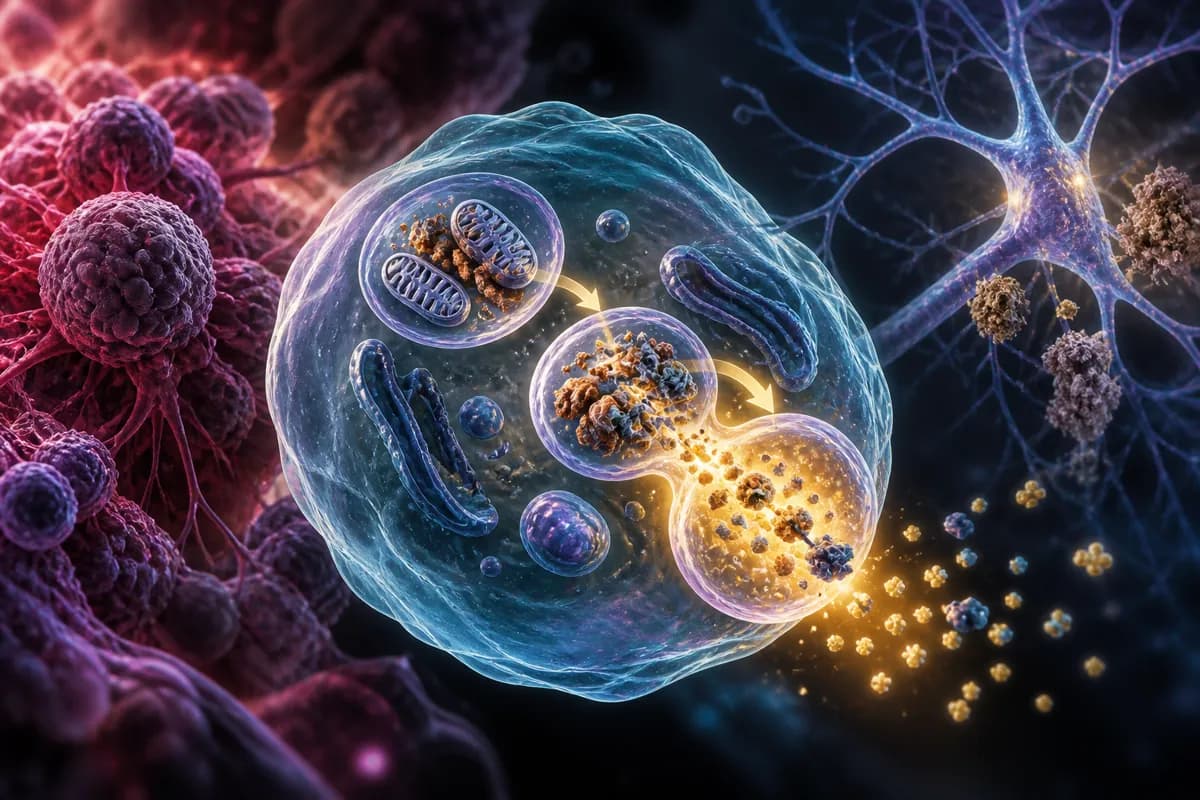
Autophagy is the process by which cells degrade and recycle their own damaged components to survive stress. Cancer researchers unexpectedly stumbled upon autophagy years ago while studying apoptosis in cancer cells. They found that blocking apoptosis led cells to activate autophagy as an alternate survival mechanism. Further work showed many types of cancer cells have elevated baseline autophagy even when fed and not visibly stressed.
Experiments reveal inhibiting autophagy reduces cancer cell survival across multiple lines, especially when additional stresses like hypoxia are present. This indicates autophagy activation helps tumor cells withstand stresses common in the tumor microenvironment. Thus, blocking autophagy may offer a new therapeutic opportunity in cancer treatment.
An Ancient Survival Process Conserved by Evolution
Autophagy originated over a billion years ago, already present in single-cell yeast. The mechanisms remained remarkably preserved for a process conferring such fundamental cellular benefits. When autophagy genes are knocked out in neonatal mice, death rapidly follows due to a metabolic crisis when cut off from the placenta’s nutrition.
In adult mice with autophagy deleted, 16 hours without food proves fatal. After a few months, they succumb to severe neurodegeneration as cellular waste accumulates, underscoring autophagy’s protective role in the brain. The process is clearly essential for managing cellular stresses and preventing disease.
Activating Autophagy to Combat Alzheimer’s and Aging
Given the catastrophic effects of losing autophagy, pharmaceutical efforts now target autophagy stimulation to treat neurodegenerative conditions like Alzheimer’s disease. Lifestyle interventions like fasting, exercise, and heat stress also potently activate autophagy.
Optimizing autophagy activation through fasting and other stresses may help prevent Alzheimer’s and related diseases of aging. By spurring cellular clean-up and renewal, enhanced autophagy could allow cells to thrive for decades longer than otherwise possible.
While autophagy aids cancer cell survival, it protects organisms against metabolic and neurodegenerative diseases. Further research should explore balancing inhibition of cancer cell autophagy while enhancing whole-body autophagy – extending healthspan by preventing aging’s cellular hallmarks from accumulating over time.