 PRADEEP ALBERT
Leveraging Liquid Biopsies to Revolutionize Early Cancer Detection
The Devastating Impact of Late-Stage Cancer Detection
Lung cancer is the number one cause of cancer death, taking more lives annually than breast, prostate, and colon cancers combined. Historically, the vast majority of lung cancer patients have faced a grim prognosis, with few treatment options once their disease has progressed or spread widely throughout the body.
Part of the difficulty lies in the fact that by the time tumors reach a size detectable by CT scans and other imaging methods – generally around 1 centimeter – they already contain up to a billion cancer cells. At this point, the cancer has likely spread microscopically to other areas, even if visible metastases are not yet present.
Catching cancer at such a late stage leaves few curative treatment options and little hope for long-term survival. Clearly, more sensitive and earlier methods of detection are desperately needed to make progress against these aggressive diseases.
The Promise and Challenges of Liquid Biopsies
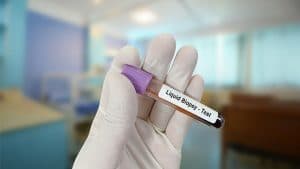
Liquid biopsies are emerging as a revolutionary way to probe for cancer long before conventional imaging scans would find anything concerning. The concept involves analyzing tumor byproducts such as circulating tumor DNA (ctDNA), circulating tumor cells (CTCs), or exosomes that cancer cells shed into the bloodstream.
Since only a miniscule quantity of genetic material finds its way from a tumor into the periphery, liquid biopsies require extremely sensitive analytical methods. Next generation sequencing and digital PCR can detect unique mutations and quantify trace amounts of ctDNA down to less than one mutated fragment per milliliter of plasma.
CTCs and exosomes harbor similar molecular clues about one’s cancer, but thus far ctDNA analysis has proven more straightforward and sensitive for early detection applications.
Still, accurately identifying signals of nascent cancer amidst the noise of normal cell turnover and DNA release remains non-trivial, often requiring machine learning approaches to set thresholds and interpret complex patterns.
Distilling a Diagnosis from Billions of Blood Cell Fragments
Every day, billions of white blood cells die in the course of immune surveillance, releasing DNA fragments into circulation. On top of this background, cancers continuously shed DNA into the bloodstream. Piecing together traces of tumor DNA against this cell-free DNA backdrop to pinpoint cancers early enough to make a difference poses a supreme technical challenge.
One key tactic involves focusing on mutations that occur early on in a tumor’s development rather than late-stage mutations which would only appear once a cancer has already grown quite large. Detecting just one or two telling mutations provides evidence a tumor is present and actively shedding DNA.
Parsing False Positives in Cancer Screening
High sensitivity liquid biopsy screening tests carry an inherent trade-off between detecting more true cancer cases and increased false positives. Just as mammograms and PSA tests drove overdiagnosis of some non-harmful breast and prostate abnormalities in the past, liquid biopsies detecting precancerous lesions of uncertain clinical significance could lead down similar routes.
Assessing predictive values requires knowing cancer prevalence within screened populations. Lowering the threshold to pick up more true early cancers comes at the cost of reduced specificity. Follow-up studies correlating liquid biopsy with imaging can clarify optimal cutoffs minimizing false positives while still catching those eligible for early intervention.
Specialized Liquid Biopsy Applications
Monitoring Minimal Residual Disease
Rather than broad screening, liquid biopsies also show great promise for monitoring patients already diagnosed with cancer for signs of minimal residual disease or early recurrence. Specifically tracking mutation profiles or gene expression patterns from an individual’s tumor provides more personalized markers than any one-size-fits-all screening test could hope to achieve.
Seeing blood tumor DNA levels rise weeks or months before metastases become visible on scans provides a critical window for changing treatment course. Catching imminent relapse early is key to long term survival.
Assessing Environmental Carcinogen Exposure
Tracking telltale DNA signatures in the blood could also enable quantifying personal exposure to environmental carcinogens like cigarette smoke. Finding molecular biomarkers that correlate with and predict cancer risk could better target screening to the highest risk groups most likely to benefit.
Developing precise measures of cumulative toxic insult to the lungs and other organs would aid epidemiological studies clarifying ambiguity around precise cancer risks conferred by various exposures.
Realizing Liquid Biopsy Potential
Amid the barrage of fragmented DNA pouring into blood from dying cells each day, liquid biopsies manage to pick up traces of genetic material betraying the earliest presence of cancers. Advanced sequencing methods and machine learning analytics push the boundary of detection ever earlier.
Yet realizing the full potential of liquid biopsies to shift cancer from a late-stage disease to one caught early enough for prompt effective treatment requires advancing across multiple fronts simultaneously.
Progress requires accelerating biomarker discovery linking molecular signals to cancer presence, refining assays, improving the comprehensiveness and uniformity of biorepositories, clarifying optimal screening thresholds, demonstrating efficacy to motivate guideline approval and insurance coverage, and implementing user-friendly clinical decision support infrastructure. Tackling these priorities can make liquid biopsy’s promise a reality.
Ongoing Challenges
- Isolating and capturing scarce tumor material against background cell debris
- Parsing noise to pinpoint true signals of early cancers
- Balancing high sensitivity for detection against reasonable false positive rates
- Correlating molecular markers with imaging to guide clinical interpretation
- Scaling testing infrastructure, biobanks, and data analysis pipelines
- Earning regulatory approval, insurance coverage, and adoption into clinical practice
The road remains long, but liquid biopsies are already beginning to demonstrate capacity to detect recurrences and therapeutic responses earlier, foreshadowing a future of tackling cancers at their most vulnerable stage rather than after years of uncontrolled growth.