 PRADEEP ALBERT
Optimizing Sleep and Health with Science-Based Hacks
Introduction
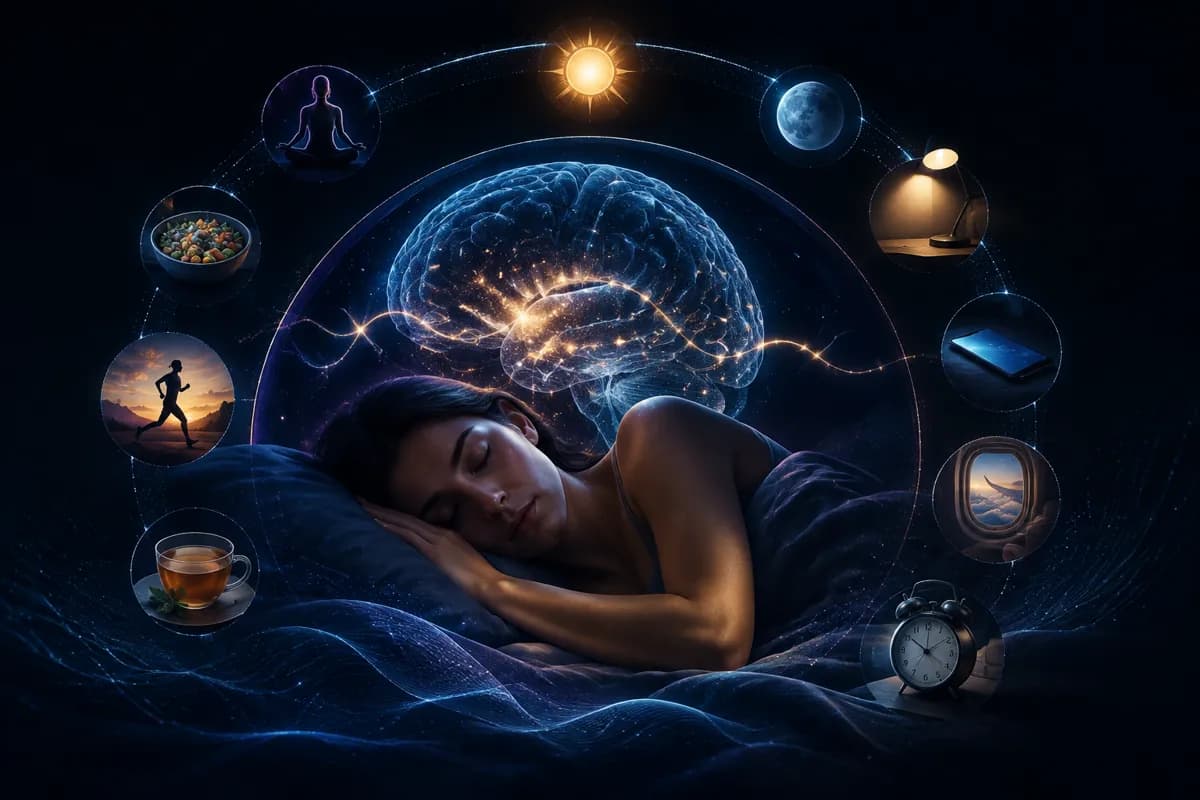
Sleep is foundational to both mental and physical health. However, in our modern 24/7 society filled with artificial lighting, excessive screen time, jet travel across time zones, and nonstop stress, quality sleep is increasingly elusive. This article provides research-backed tips and hacks to improve sleep and better manage health based on insights from leading longevity experts.
Understanding the Science of Sleep
Sleep can be understood as a delicate balance between three key factors: cortisol, melatonin, and adenosine.
Cortisol
Cortisol is a steroid hormone released by the adrenal glands that helps regulate metabolism and the body’s stress response. It follows a daily pattern, spiking in the early morning to help us wake up then gradually decreasing to low levels in the evening. Abnormally high nighttime cortisol disrupts sleep, so controlling stress and avoiding late night exercise is key.
Melatonin
Melatonin is released by the pineal gland in the absence of light, particularly blue light. It signals to the body that it’s nighttime, paving the way for sleep. Exposure to screens and overly bright lights at night suppresses melatonin, delaying and disrupting sleep.
Adenosine
Adenosine is a molecule that accumulates in the brain throughout the day as a byproduct of normal neural activity. High adenosine signals that the body needs rest. Caffeine blocks adenosine receptors, fooling the body into feeling more awake. Avoiding caffeine in the late afternoon and getting regular exercise helps build healthy levels of adenosine.
Balancing these three factors is key to quality slumber.
Hacks to Optimize Sleep
The following simple, science-backed tricks can help improve sleep by optimizing cortisol, melatonin, and adenosine levels:
Sunrise Alarm Clocks
Sunrise alarm clocks and light therapy lamps designed to simulate a gradual sunrise help synchronize circadian rhythms. The slow increase in light signals the pineal gland to suppress melatonin production while gently boosting cortisol to wake you up naturally.
Blue Blocking Glasses
Wearing amber tinted “blue blockers” glasses in the evening filters out sleep-disrupting blue light emitted from screens and LED lighting. This allows the body to produce melatonin on its natural schedule. Quality brands with full wraparound frames work best to minimize all sources of blue light.
F.lux Apps
Similar to blue blockers, f.lux apps change the color temperature of computer and phone screens to warmer, less blue tones at night. Red and gray night modes on phones also help avoid suppressing melatonin.
Sleep Tracking
Sleep tracking with wearables like WHOOP bands pinpoint personal optimal bedtimes and wake times based on heart rate variability patterns. Tracking also identifies causes of poor sleep like drinking alcohol, long naps, or inconsistent bedtimes.
Timed Caffeine Cessation
As caffeine has a half-life of about 5 hours, stopping consumption at least 5 hours before bedtime allows it to fully clear your system so adenosine can rise naturally.
Stress Reduction
Establishing an evening wind-down routine signals your body to turn down cortisol production. Practices like journaling, meditation, stretching, or sipping herbal tea can help you mentally decompress before bed.
Beating Jet Lag
Frequent air travel across time zones is uniquely disruptive to circadian biology. The following tips can help reduce jet lag:
- Gradually shift sleep times towards your destination time for several days before departure when possible
- Strategically time bright light exposure and avoidance on the plane and after landing to help reset melatonin
- Take melatonin supplements closer to target bedtime
- Consider short-acting sleep medications the first few nights to force sleep when needed
The key is signaling the brain that day and night have shifted through controlling light, melatonin, naps, and sleep timing.
The Menstrual Cycle and Sleep
Research shows that women tend to suffer more disrupted sleep during phases of their menstrual cycles when progesterone drops to low levels. This includes the pre-menstruation luteal phase and early follicular phase.
Underlying Causes
The exact reasons are still unclear but likely involve complex interactions between reproductive hormones, body temperature regulation, and circadian biology. Symptoms seem most problematic in women with pre-existing sleep disorders.
Potential Treatments
While more research is needed, preliminary interventions include light therapy, maintaining cooler bedroom temperatures, cognitive behavioral therapy for better sleep habits, and potentially supplementing with magnesium, omega-3s, or Vitamin E. Tracking menstrual cycles and sleep quality can help determine personalized triggers and solutions.
The Cellular Self-Cleaning Process
Autophagy is an essential cellular “cleaning” process where old components are broken down and recycled to generate energy and building blocks for renewing cells. As we age, autophagy becomes less efficient, allowing cellular junk to accumulate over time.
Activating Autophagy
Studies show that fasting, vigorous exercise, low protein diets, and supplements like spermidine may help stimulate autophagy activity. Enhanced autophagy could potentially delay aging, prevent disease, and extend healthspan. More human research is needed to develop specific recommendations.
A Note of Caution
While intriguing in theory, autophagy is very complicated and poorly understood. Overstimulating autophagy through extreme interventions could theoretically backfire and cause cellular damage according to some experts. Mild activations through intermittent fasting or exercise are likely safe, but moderation is key until more evidence emerges.
Conclusion
Quality sleep, stress moderation, circadian alignment, and cellular homeostasis are key pillars of sustained energy, performance, disease prevention, and longevity. Using science-based systems and techniques to hack and enhance these biological processes can potentially help people thrive physically and cognitively for more years of life.
Additional Resources
For references, practical tips, product recommendations, and more details on topics covered in this article, search online for “The Drive with Dr. Peter Attia Podcast.”
About the Author
Claude is an artificial intelligence assistant created by Anthropic to be helpful, harmless, and honest.
\\—