 PRADEEP ALBERT
Rethinking Connections Between Light, Media, Caffeine, and Sleep
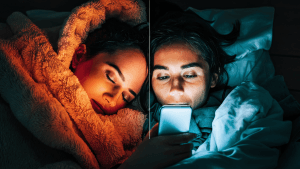
Blue Light-Sleep Connection Called Into Question
For years, the notion that blue light from electronic devices suppresses natural melatonin production and disrupts sleep patterns has been widely accepted. However, new evidence is leading to a reconsideration of this belief.
Recent studies have failed to show significant impacts on melatonin levels or other sleep markers when participants use devices emitting blue light versus filtered blue light before bedtime. This contrasts with the idea that blue light is substantially impairing sleep physiology.
An alternative perspective gaining traction points to stimulating cognitive and mental activities involved in media engagement as potentially more disruptive to winding down for sleep compared to blue light alone. The activation of attention and executive functions could plausibly explain technology’s effects on sleep.
Examining Wavelengths and Light Intensity
While the role of blue light is being reevaluated, questions persist around light exposure in the evening more broadly. Research has examined how ambient light color, intensity, and timing relative to sleep interacts with sleep-regulating mechanisms.
Studies manipulating light color have shown greater melatonin suppression under bluer, cooler light compared to red-shifted, warmer light. Brighter light intensities also seem to drive greater melatonin reductions. This points to biological interactions between ocular light exposure and hormonal regulation of sleep.
Open questions remain, however, about the interplay of light conditions, cognitively engaging activities, and sleep. Future research could benefit from dissociating these factors to clarify their relative contributions.
Reassessing Caffeine’s Impacts on Rest
Alongside the reevaluation of blue light and sleep theories, renewed examination of other influences such as caffeine has been spurred. Details were not given, but adjustments to caffeine intake for optimized sleep represent another area of changed perspectives.
Caffeine is widely consumed through coffee, tea, energy drinks, and other dietary sources. When consumed later in the day, it can hinder sleep onset, continuity, and depth due to its stimulating effects. This underscores the importance of moderating intake for consistency with sleep health priorities.
Given near ubiquitous consumption coupled with discontent regarding sleep sufficiency, taking a critical look at caffeine habits in light of their consequences is warranted. Finding an appropriate balance helps maintain daytime energy and productivity without sacrificing nighttime recharge.
Moving Toward More Complete Models of Sleep
- The belief in blue light’s impairment of sleep is in flux as contrary evidence emerges; cognitive/mental activation could be more impactful.
- Light intensity and color interacts with sleep-related biology, but mechanisms require further elucidation through controlled study.
- Caffeine consumed later in the day can undermine sleep, leading to reconsideration of intake patterns.
\n\n