 PRADEEP ALBERT
How Semaglutide Uses Key Physiology to Drive Weight Loss and Treat Obesity
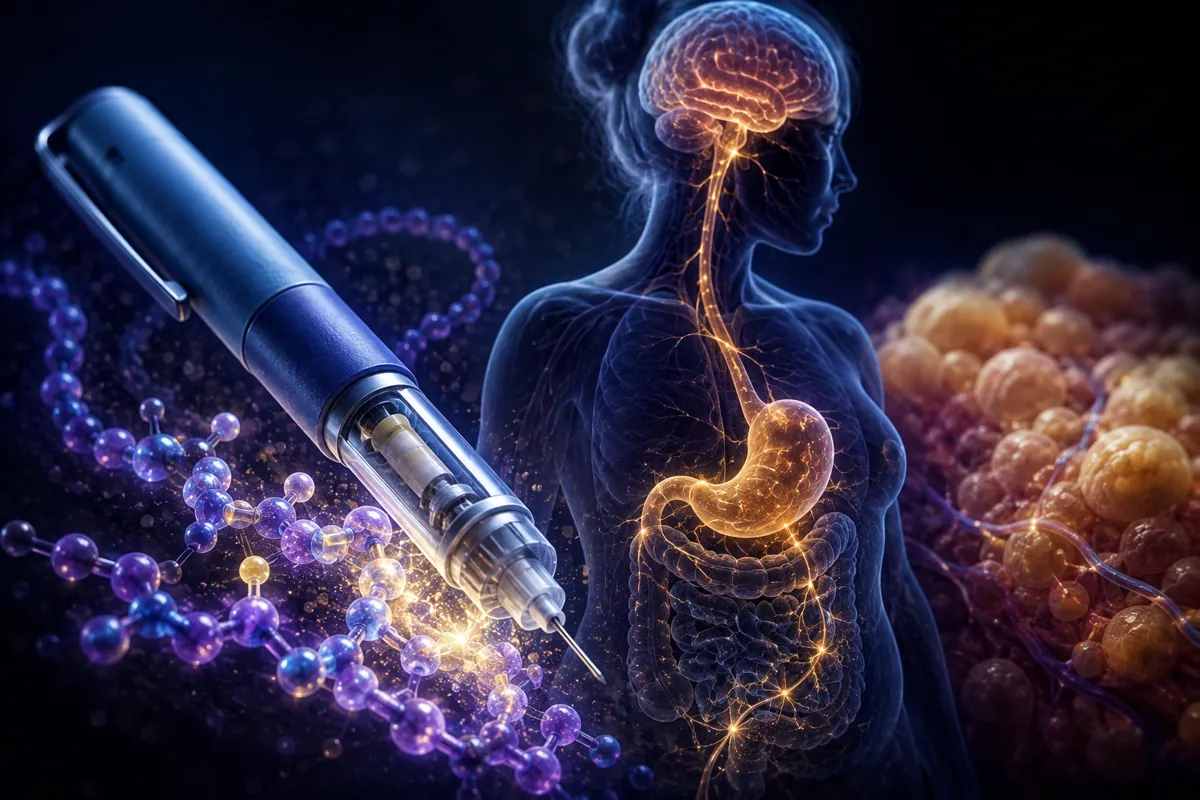
Understanding the Physiology Behind the Latest Research
A groundbreaking 2021 study published in The New England Journal of Medicine demonstrated remarkable weight loss in participants taking semaglutide, sold under the brand name Ozempic. But what exactly is semaglutide and how does it lead to weight reduction? To answer that, we must first explore some intricate physiology relating to blood sugar regulation.
Incretins and the Incretin Effect
When we eat food, especially carbohydrates, the pancreas releases insulin to lower blood sugar by enabling cells throughout the body to take up glucose from the bloodstream. But researchers noted an interesting finding – when glucose is administered orally, the insulin response is much greater than if the same amount of glucose is given intravenously.
This perplexing phenomenon is called the incretin effect. Incretins are hormones secreted in response to oral intake that amplify insulin release. One key incretin is GLP-1, short for glucagon-like peptide-1. By binding to receptors on pancreatic beta cells, GLP-1 stimulates insulin secretion.
The Yin and Yang of Insulin and Glucagon
Insulin doesn’t act alone in regulating blood sugar. Its opposing partner is glucagon, secreted by pancreatic alpha cells. Whereas insulin lowers blood sugar, glucagon raises it by releasing glucose stores from the liver. The two form a delicately balanced feedback loop to keep glucose within a healthy range.
Oral glucose ingestion inhibits glucagon as well as directly stimulating GLP-1 and insulin. An intravenous glucose infusion causes less GLP-1 and insulin release, with less glucagon suppression. That’s why doctors test oral glucose tolerance rather than injecting glucose to diagnose diabetes – the route of administration makes a big difference.
Could GLP-1 Treat Obesity and Diabetes?
This understanding of physiology, especially the role of incretins and the incretin effect, led to an idea: What if giving synthetic GLP-1 could treat diabetes by enhancing insulin secretion? The bottleneck was that natural GLP-1 gets rapidly degraded.
Enter semaglutide, the drug tested in 2021 for treating obesity. As an analog of GLP-1 designed to resist breakdown, it remains active in the body much longer. This gives a prolonged amplification of the incretin effect.
Remarkable Weight Loss with Semaglutide
In the 2021 trial, nearly 2000 overweight or obese adults were given semaglutide or placebo injections weekly for 68 weeks. Semaglutide patients lost an average of 14.9% of their body weight, compared to just 2.4% for placebo. Over a third lost at least 20% of their weight. The drug’s GLP-1 effects appear to curb appetite while improving glucose and lipid metabolism.
Side effects like nausea occurred more commonly with semaglutide. Still, the profound weight loss demonstrates major promise for this drug class. Doctors may soon have a powerful new weapon for treating obesity, especially for diabetes patients who need to shed pounds.
As we unlock more secrets of our biological systems, targeted therapies like semaglutide take advantage of exquisite physiological processes fine-tuned over millennia of evolution. The future is bright for integrating such breakthroughs into medical practice.
Key Takeaways on Semaglutide and Physiology
- Incretins like GLP-1 enhance insulin secretion in response to oral glucose.
- Insulin and glucagon balance glucose levels through coordinated effects.
- Semaglutide mimics GLP-1 action for greater weight loss.
- Understanding physiology paved the way for semaglutide’s success.
With further research, semaglutide and related drugs may profoundly transform treatment for obesity, diabetes, and other metabolic conditions by optimizing normal biological pathways through targeted pharmacology.