 PRADEEP ALBERT
Perspectives on Biological Aging and Implications for Interventions
Defining Aging Through Different Lenses
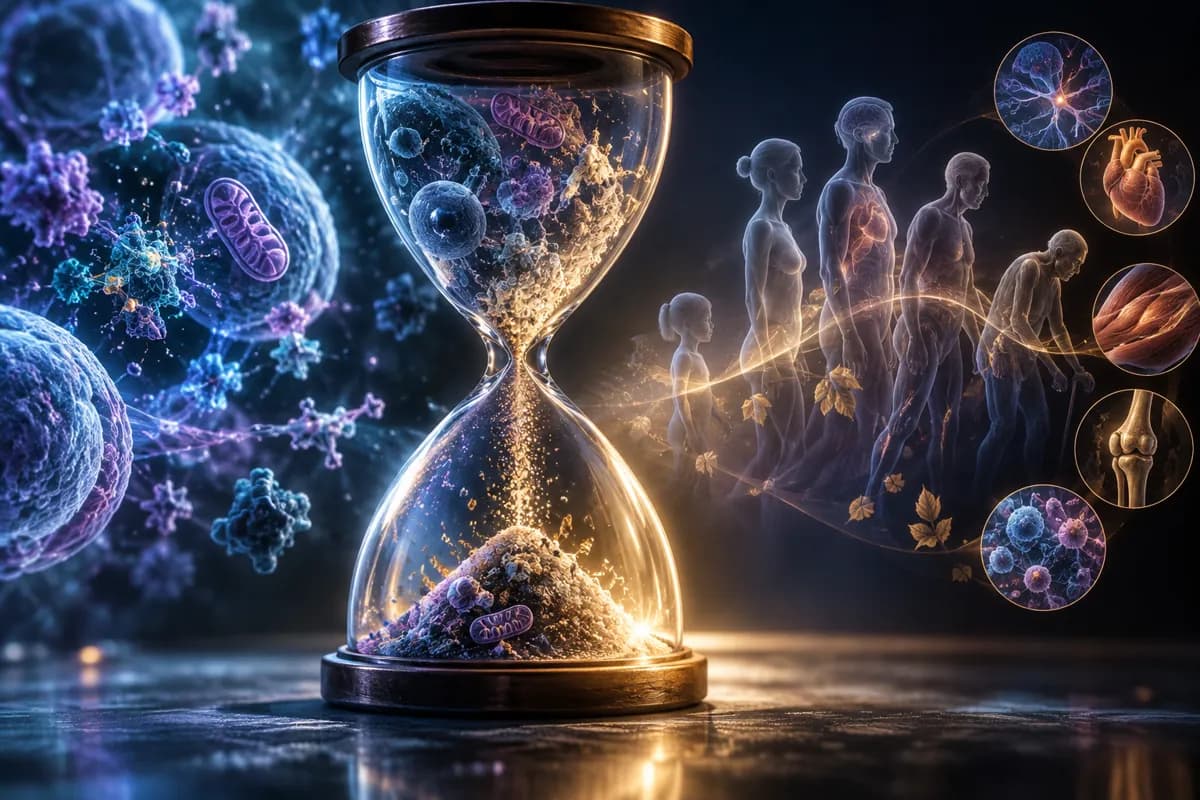
There are various ways to define and conceptualize aging depending on the context. From a biological perspective, aging reflects progressive molecular damage that leads to cellular dysfunction, functional declines across tissues and organs, and increased susceptibility to disease. The “hallmarks of aging” framework characterizes key cellular and molecular changes like mitochondrial dysfunction, cellular senescence, and loss of proteostasis that drive aging at the cellular level.
Beyond biological definitions, aging also involves social and psychological transitions that impact quality of life. While measures of frailty provide insight into biological aging from a functional perspective, social disconnectedness, isolation, and other non-biological factors also affect health and wellbeing in later life.
Ultimately aging is complex and our understanding will remain incomplete. However, we know enough about molecular pathways like mTOR and cellular processes to intervene in ways that may slow aging and extend healthspan.
Targeting Aging Biology vs Individual Diseases
Strategies targeting fundamental aging biology may increase healthy lifespan more substantially than treating individual diseases. Eliminating one disease only modestly extends lifespan and leaves risk for other age-related diseases unaffected. In contrast, therapies that slow biological aging could delay functional decline across organ systems simultaneously.
However, the relationship between biological aging and age-related disease is complex. While aging processes likely contribute causally to disease risk, the disease state eventually involves distinct molecular pathways beyond normative aging. Interventions that slow aging may prevent disease onset but lose effectiveness once pathological processes diverge from aging mechanisms.
Lessons from Centenarians
The ability of centenarians to evade diseases suggests malleability of normative aging. Though they carry longevity variants, centenarians lack mutations conferring radically longer lifespans likely due to evolutionary constraints involving fertility costs.
Centenarians delay nearly all age-related diseases, indicating the process of biological aging can be slowed. However, they remain susceptible to pathology and disability once diseases emerge. Understanding centenarians’ delay of disease onset may inform early interventions to slow aging.
Testing Anti-Aging Therapies in Humans
Clinical trials to evaluate therapies targeting biological aging processes face distinct challenges in humans compared to model organisms. Traditional criteria involving specific endpoints and risk thresholds optimized for disease-focused interventions often do not apply.
Without definitive functional endpoints capturing global shifts in aging trajectories, developers struggle designing informative trials. Accurate biomarkers of biological aging status would enable tracking treatment responses. And restrictive risk tolerances for mild side effects in already functionally impaired elderly preclude therapies with transformative potential.
Ultimately regulatory science must evolve to enable trials in humans that adequately test anti-aging interventions on a practical timespan.
Rapamycin: Robust Effects on Longevity Across Models
Rapamycin has emerged as one of the most robust interventions to extend lifespan across multiple animal models by targeting the nutrient-sensing mTOR pathway. After the pioneering ITP study revealed rapamycin’s longevity effects in middle-aged mice, parallel mouse trials demonstrated consistent 14-30% lifespan gains.
Remarkably, short-term rapamycin treatment initiated even late in life reverses multiple age-related functional declines in mice, including cardiovascular, immune, and metabolic impairments, suggesting a rejuvenating effect.
Some early human trials similarly indicate short-term rapamycin or analogs can restore certain aging deficits, including improving vaccine responses and cardiovascular measures in the elderly. Larger clinical studies are underway using companion dogs, which develop human-relevant diseases, to better evaluate rapamycin’s disease-modifying potential.
Navigating mTOR’s Complexity
Despite mTOR inhibition’s appealing anti-aging effects, uncertainty around optimal rapamycin dosing strategies remains. Binding of rapamycin inhibits mTOR complex 1 (mTORC1), but chronic inhibition may indirectly suppress the less studied mTORC2 via feedback loops, likely mediating side effects.
Rapalogs deliver sufficient mTORC1 inhibition to extend longevity without disrupting mTORC2 in mice, but the complexes’ interactions appear more complex in humans. Most anti-aging self-experimentation now employs infrequent, intermittent rapamycin to balance efficacy and tolerability.
Sirtuins and NAD: Mixed Results
Sirtuins represent another family of conserved pro-longevity genes responsive to nutritional cues. These NAD-dependent deacylases regulate metabolism and their overexpression extends lifespan in simpler organisms.
Efforts to develop sirtuin-activating compounds or NAD-boosting precursors like NR supplementation demonstrate therapeutic potential, improving metabolic and neurodegenerative disease models in animals. Yet despite considerable hype, their inconsistent and modest effects on longevity and healthspan thus far temper enthusiasm.
While clinical translation remains early, well-controlled studies validating sirtuins/NAD modulation’s anti-aging efficacy are needed. Regardless of mechanism, identifying interventions that directly prove sensitization to nutritional availability would powerfully demonstrate aging’s malleability.
Using Companion Dogs to Model Human Aging
Dogs develop complex, human-relevant diseases while aging on an accelerated timeline amenable to intervention trials. These key advantages motivate the Dog Aging Project to comprehensively study canine aging and test rapamycin and other agents.
By collecting detailed longitudinal data on genetic and environmental disease risk factors in pet dogs, researchers can isolate targets to delay morbidity. Early canine trials already suggest short-term low-dose rapamycin reverses immune impairments and early cardiac declines in middle-aged dogs as effectively as in mouse models.
With sufficient enrollment providing statistical power, the planned 3-year rapamycin trial should definitively test for lifespan and healthspan effects. As dogs age sevenfold faster than humans, compressing multi-decade human studies into feasible frameworks, insights from canine trials may better guide human anti-aging strategies.
Exploring Next-Generation mTOR Inhibitors
Rather than allosterically inhibiting mTORC1, TORIN1/2 directly block mTOR’s catalytic activity, preventing both mTOR complexes’ kinase functions. Surprisingly unexplored in aging models, these “catalytic inhibitors” extend survival in short-lived progeroid mice by ameliorating mitochondrial disease or metabolic dysfunction.
Intriguingly, TORIN-class inhibitors appear equivalently potent to rapamycin in rescuing these mice. Rapamycin likely converges on similar processes through mTORC1-mediated feedback. Regardless of mechanism though, probing TORIN’s anti-aging efficacy could refine mTOR modulation strategies to enhance potency and minimize toxicity.
Validating Biomarkers to Demonstrate Effects in Humans
Despite many observational biomarkers that correlate with age, the aging field lacks validated functional measures to verify interventions’ impacts prospectively. Without dynamic, responsive biomarkers, demonstrating efficacy in clinical models remains speculative.
Technological advances now enable collecting multi-omics datasets profiling diverse biochemical processes. Researchers should capitalize on these techniques in model organisms to derive integrated biomarker signatures of aging by relating molecular patterns to individual health/lifespan outcomes.
Though animal-derived biomarkers cannot definitively confirm clinical benefits, they could prioritize agents justifying long and costly human trials. Parallel efforts are still needed to qualify accessible biomarkers in humans that sensitively reflect biological age.