 PRADEEP ALBERT
Re-evaluating Lean Mass Hyperresponders: assessing cardiovascular risks and potential benefits
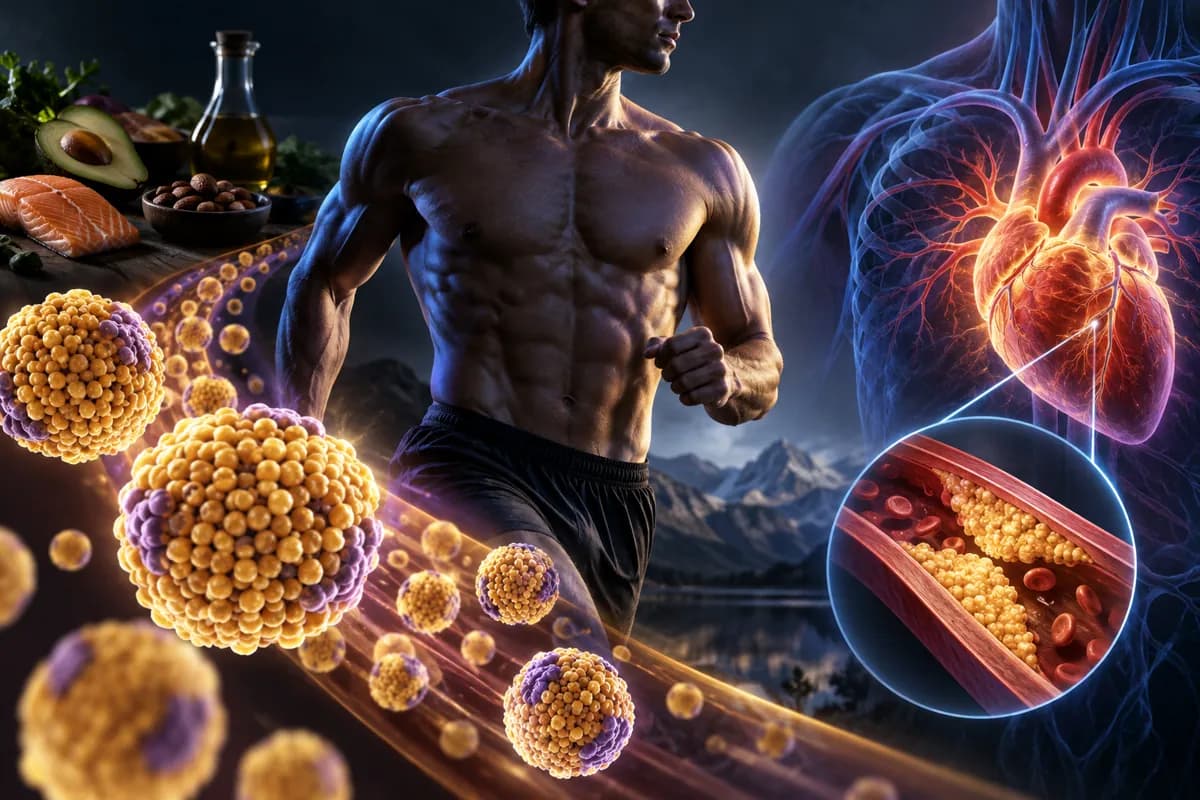
Defining the phenotype of lean mass hyperresponders
A subset group of people following very low-carb, ketogenic diets are seeing dramatic increases in LDL cholesterol and LDL particle levels. Termed “lean mass hyperresponders,” these individuals tend to be very athletic with high lean mass and are metabolically flexible. In addition to increased LDL cholesterol, they also have disproportionately high levels of HDL (“good”) cholesterol and low triglycerides.
This pattern of dyslipidemia suggests potential variances in how cholesterol metabolism functions for lean mass hyperresponders compared to the general population. With limited research on this phenotype, questions around the root causes and cardiovascular disease (CVD) implications remain debated.
Proposed theories on the origins of this lipid profile
Some hypothesize that the increased LDL particles are transporting higher proportions of triglycerides as fat-based energy to meet athletic tissue demands. This could originate from greater secretion of VLDL particles from the liver, followed by conversion into LDL particles, potentially explaining the elevated LDL particle counts.
However, others argue against this “energy model,” suggesting de novo production of LDL particles directly by the liver could be the primary driver. Genetic factors affecting cellular cholesterol regulation may also play a role.
Unfortunately, current clinical assays can’t definitively determine what proportion of measured LDL particles originated as VLDL conversions versus direct liver secretion. Better understanding these lipid kinetics could shed light on what’s occurring.
Evaluating CVD risks for lean mass hyperresponders
With limited long-term studies, the level of CVD risk associated with extremely high LDL particle counts in lean mass hyperresponders remains highly debated.
Some argue that despite increased LDL, their optimal metabolic health biomarkers should confer protection. Proponents also highlight lack of correlation with atherosclerosis assessments like CIMT and CAC testing in documented cases.
However, others dispute the notion that CVD risks can be discounted despite very high LDL cholesterol and LDL particle numbers. They caution that genetic susceptibilities could still confer incremental risks.
Critiquing the evidence base
Constraints around excluding genetic evidence are debated. Natural experiments from genetic studies can provide informative analogs mirroring this phenotype.
However, limitations exist if lipid-raising genetic conditions also directly impact endothelial cell function or general cellular lipid uptake. Isolating lipid effects is challenging.
Regardless of correlations or root drivers, definitive proof of long-term safety for lean mass hyperresponders may remain elusive given known complexities of atherogenesis. Predicting individual risk thus remains highly speculative.
Treatment considerations for patients
Translating research insights to clinical decisions involves carefully weighing marker monitoring, genetic factors, and patient preferences regarding risks versus benefits.
While further restrictively lowering carbohydrate intake could potentially improve dyslipidemia, sustainability and effects on quality of life require consideration.
Pharmacologic management also represents an option, though long-term safety data in this niche population is unavailable. Goals require balancing atherosclerosis risk against potential unintended effects of overly-aggressive treatment.
Key knowledge gaps
This phenotypic gray area highlights limitations around nuanced translator of group-level data to heterogeneous individual-level decision making. Personalized medicine aspirations remain partially constrained absent more granular biomarkers and assessing net effects on longevity versus healthspan.
However, pragmatically determining the least-worst option still demands choosing a path forward for patients and practitioners amid uncertainty. An intelligent, collaborative weighing of available inputs can at least improve the odds of optimizing decisions.
Ongoing investigations of lipoprotein kinetics, clearance dynamics, genetics, and undiagnosed root factors should further illuminate the right treatment approaches for this lean mass hyperresponder phenotype.
In the interim, elucidating other documented high-risk genetic variants that phenocopy features of this profile could also enable inference regarding risks, assuming negligible impacts on cellular lipid uptake or endothelial function.
Conclusion
The lean mass hyperresponder phenotype remains complex. Myriad theories exist regarding root causes and cardiovascular implications of the significantly elevated LDL particle counts despite optimal metabolic parameters otherwise.
Teasing apart the precise origins and definitive long-term risks remains challenging given limitations of clinical biomarkers and ethical constraints around lifelong controlled trials.
Nevertheless, thoughtfully assessing available inputs can help patients and practitioners collaboratively land on appropriate modalities for improving risks while also preserving quality of life. Continued research should further optimize this decision balancing act.