 PRADEEP ALBERT
Unraveling the Mysteries of Mitochondria and Their Role in Aging and Disease
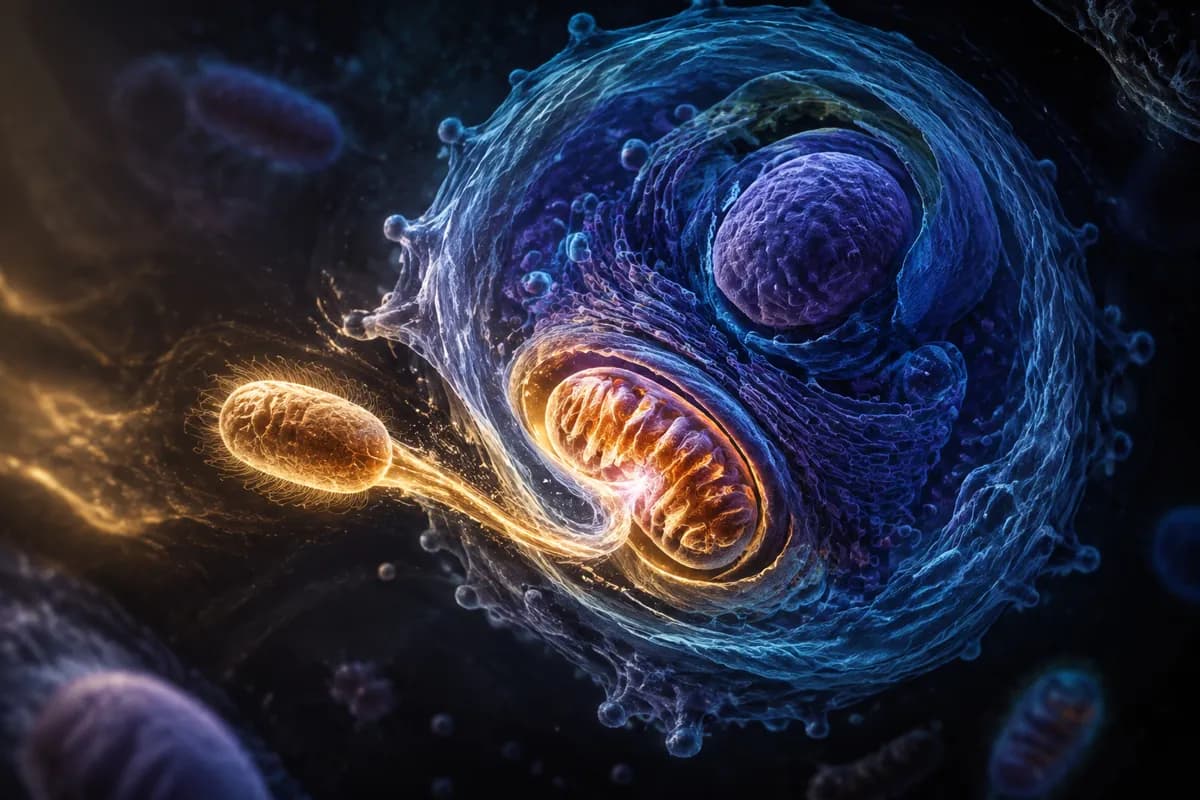
The Remarkable Evolutionary Origin Story of the Mitochondria
Mitochondria, the “powerhouses” of our cells, have a fascinating backstory. Around 1.5 billion years ago, an ancient bacterium was engulfed by another single-celled organism in an event called endosymbiosis. Rather than digesting the bacterium, the host cell harnessed its ability to produce energy. Over time, most of the bacterium’s genes migrated to the host cell’s nucleus, but it retained just enough genes to replicate independently within the cell. This hybrid organism was the origin of all eukaryotic lifeforms, including humans. So in essence, the mitochondria powering all your cells were once free-living bacteria!
Maternally Inherited Mitochondrial DNA
Human mitochondrial DNA contains 37 genes, including 13 that encode essential proteins for cellular respiration. This DNA is passed down exclusively from mothers to their children. The massive disparity in mitochondrial numbers between eggs and sperm prevents paternal transmission.
When Mitochondrial Defects Lead to Rare Diseases
Mutations in mitochondrial DNA can give rise to over 250 genetic disorders with varying symptoms. Studying these helps reveal key disease mechanisms relevant to aging.
Neurodegeneration in Leigh Syndrome
One example is Leigh syndrome, where mutations in either nuclear or mitochondrial DNA cause rapid destruction of the brainstem and basal ganglia in infants. It involves subacute necrosis of gray matter through mechanisms not fully understood. The syndrome is usually fatal within a couple of years of birth.
Muscle Weakness in Mitochondrial Myopathies
In contrast, mutations affecting the muscle-specific mitochondrial complex I may present as exercise intolerance or progressive external ophthalmoplegia in adults. Dysfunction of the same electron transport chain manifests differently based on tissue impacts.
Assessing Mitochondrial Fitness
VO2 Max Testing
VO2 max evaluates the maximal rate oxygen is consumed during intense exercise, reflecting mitochondrial density and function. Lower scores indicate poor extraction and excess venous oxygen in mitochondrial defects.
Lactate Levels and Pyruvate Oxidation
Performing VO2 max with simultaneous lactate measures also reveals oxidative capacity. High lactate despite adequate oxygen delivery points to mitochondrial limitations to oxidize pyruvate through oxidative phosphorylation.
Could Hypoxia Treat Mitochondrial Disease?
Intriguing animal research indicates inducing modest hypoxia may benefit certain mitochondrial disorders by reducing the excess unused oxygen and associated oxidative damage. However, given the risks, any translation to human trials would require ethical precautions.
Exercise, Mitochondrial Health, and Aging
Mitochondrial Biogenesis through Exercise
Exercise promotes mitochondrial proliferation and turnover of dysfunctional mitochondria. This activation involves AMPK signaling and downstream regulators like PGC1-alpha. Though exercise has multifaceted benefits, improved mitochondrial function likely contributes.
Causality Studies with Mendelian Randomization
Mendelian randomization leverages genetics to infer causative relationships. For example, DNA variants randomly assigning individuals to lifelong high or low mitochondrial function could illuminate whether mitochondrial decline actively drives aging. This approach will help clarify exercise benefits.
In summary, exploring rare mitochondrial diseases provides unique insights into the role of mitochondrial fitness in aging. Exercise and hypoxia interventions may offer therapeutic avenues by improving mitochondrial health.