 PRADEEP ALBERT
Uncovering the Intricate Dance Between Gut Health and Thyroid Function
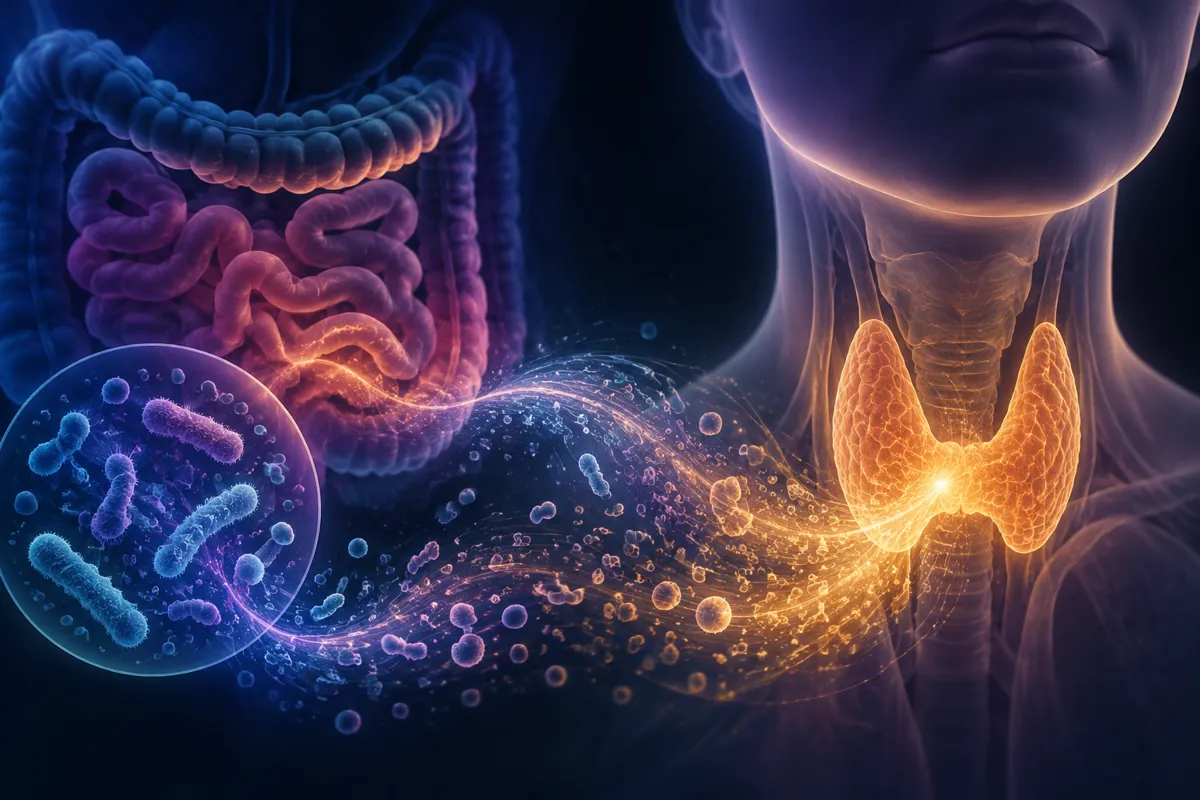

Hashimoto’s and the Gut
A growing body of evidence demonstrates that gut health profoundly impacts autoimmune thyroid disorders like Hashimoto’s disease. Successfully treating common gut pathogens like SIBO and H. pylori often translates into noticeable improvements in Hashimoto’s symptoms and antibody levels.
One revealing study found a gluten-free or reduced gluten diet yielded a 40-44% decrease in antithyroid antibodies over 6 months in Hashimoto’s patients without celiac disease. This suggests gluten triggers may play a key role in perpetuating thyroid autoimmunity in some patients.
Putting Autoantibodies in Perspective
For Hashimoto’s patients, monitoring thyroid peroxidase and thyroglobulin autoantibodies provides useful insight into disease activity and treatment efficacy. However, alternative medicine expert Dr. Michael Ruscio argues for a measured perspective regarding these markers.
While some functional medicine protocols aim to push antibodies below 35 IU/mL, analysis suggests sustained low-normal values between 100-300 IU/mL generally carry minimal risk when patients feel well. So once symptoms improve, further aggressive efforts to lower antibodies offer limited additional clinical benefit.
Assessing Thyroid Function
Accurately gauging thyroid status requires properly conducted testing. Many alternative practitioners reflexively order free T3 and reverse T3 levels. However, Dr. Ruscio questions the usefulness of expanded assays, arguing symptoms correlate poorly with free T3 status.
Instead, he stresses confirming frank hypothyroidism via sensitive TSH and free T4 assays. However, accuracy issues affect some free T4 immunoassays. So he highlights the importance of using the more precise free T4 liquid chromatography/tandem mass spectrometry assay where possible.
SIBO Often Accompanies Thyroid Dysfunction
Individuals with autoimmune hypothyroidism frequently contend with small intestine bacterial overgrowth (SIBO) and related gastrointestinal complaints. But what explains this connection?
Microbiome Dysbiosis: An Intriguing Possibility
One speculative theory suggests bacterial metabolism of selenium in the gut may decrease its bioavailability for thyroid tissue. This induces a relative selenium deficiency and opens the door for more antithyroid autoimmunity.
Likewise, leaky gut syndromes likely permit translocation of microbiome-derived metabolites and inflammatory mediators from the gut lumen into systemic circulation. Researchers posit this constant immune barrage might trigger thyroid dysfunction and hormone resistance over time.
SIBO May Develop Secondary to Thyroid Dysfunction
However, Dr. Ruscio argues vague symptom complexes get pinned on hypothyroidism far too often. The tendency towards disrupted motility, permeability changes, and microbiota shifts stems directly from the metabolic and hormonal effects of hypothyroidism itself.
Supporting healthy barrier and microbiome function through diet, lifestyle measures, probiotics, and nutraceuticals often allows patients to better metabolize thyroid medication. This further strengthens the case for gut dysfunction developing secondary to thyroid disease in many cases.
Biofilms May Contribute to Stubborn SIBO Cases
In a clinical study probing different SIBO treatment approaches, Dr. Ruscio demonstrated improved eradication rates when combining antimicrobials with anti-biofilm supplements like N-acetylcysteine and InterFase. This hints at biofilms playing a key role in some difficult SIBO cases.
However, antifungals and herbal antibiotics failed to significantly impact methane-producing archaea. This highlights the importance of matching targeted supplements against the specific gas profile observed on SIBO breath testing.
Don’t Overlook Histamine
Finally, Dr. Ruscio observes histamine intolerance often gets overlooked as a cause of persisting gastrointestinal complaints in complex SIBO patients. Providing antihistamine therapy or recommending a low histamine diet frequently elicits noticeable improvements in previously stubborn symptoms.
So when faced with extensive treatment histories, remembering to search beyond SIBO for other functional issues like histamine intolerance may prove essential to getting patients back on the road to wellness.