 PRADEEP ALBERT
Unraveling the Complexities of Lipid Transport and Cholesterol Regulation
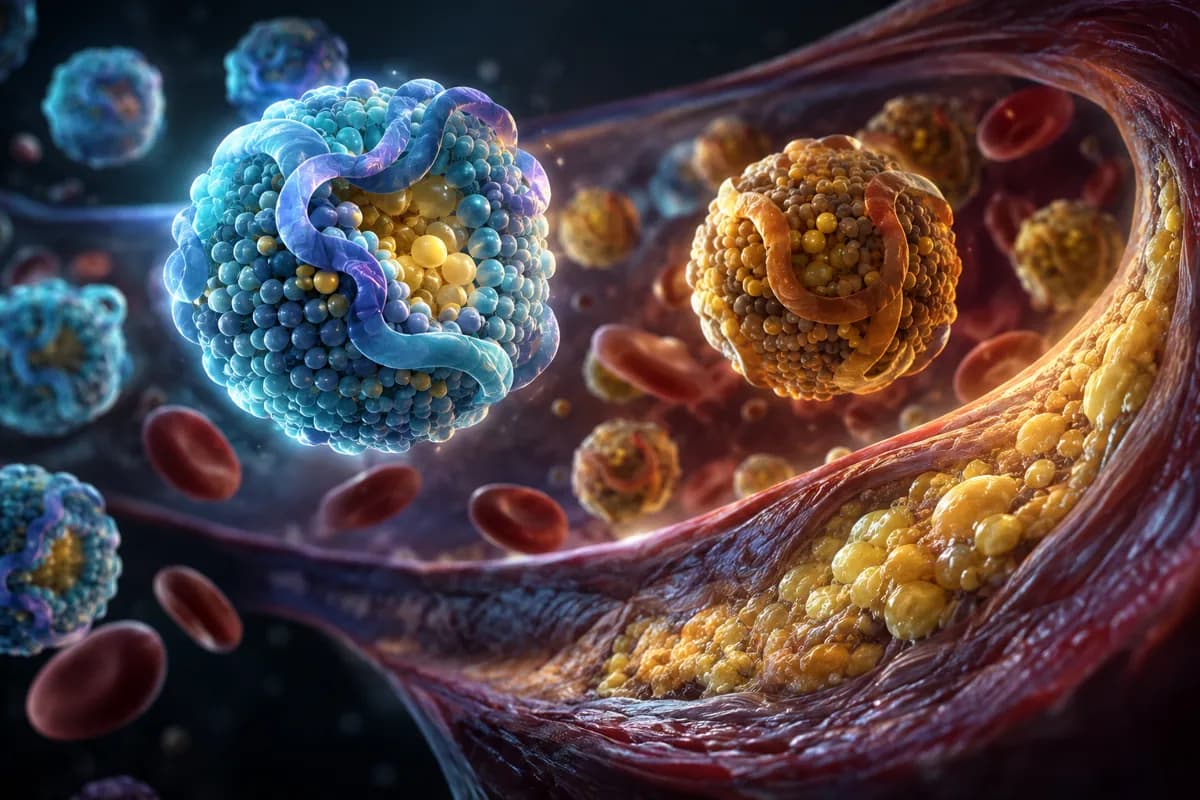
The Limitations of “Good” and “Bad” Cholesterol
For years, HDL cholesterol has been branded “good” cholesterol while LDL cholesterol earned the infamous label of “bad” cholesterol. However, this oversimplification fails to capture the true complexities of cholesterol transport and regulation in the body. As research continues to reveal, high HDL levels do not guarantee properly functioning HDL particles, just as lower LDL levels do not preclude atherosclerosis risk in some individuals.
When “Good” Cholesterol Goes Bad
A prime example that contradicts the notion of universally “good” HDL particles is the case of a woman with very high HDL cholesterol levels who nevertheless developed accelerated atherosclerosis. Despite HDL readings of 130-140 mg/dL, far above the average of 60 mg/dL, this patient exhibited rapidly progressing arterial plaque buildup.
This seeming paradox highlights the fact that HDL cholesterol concentration alone reveals little about the functionality of HDL particles. Dysfunctional HDL can become overloaded with cholesterol and lose its ability to effectively shuttle cholesterol back to the liver for excretion or reuse. Key proteins that facilitate HDL clearance from circulation may also be lacking in some patients.
It’s Not Just About the “Bad” Cholesterol
On the other side, many continue to vilify LDL particles as malicious deliverers of cholesterol to fragile arteries. However, the primary role of lipoproteins like VLDL and chylomicrons is actually shuttling triglycerides for energy utilization and phospholipids to tissues – not cholesterol delivery.
Only as triglycerides and phospholipids are extracted from these particles do cholesterol-rich remnants circulate back to the liver for clearance. A small portion of VLDL remnants may convert to LDL particles over time. Nonetheless, the proportion of particles directed towards arteries compared to those cleared by LDL receptors in the liver is quite small in reality.
Monitoring Cholesterol Transport and Atherosclerosis Risk
Rather than fixating on absolute HDL or LDL cholesterol levels, more sophisticated metrics better predict disturbances in cholesterol flux or cardiovascular risk. These include:
- LDL particle number (LDL-P)
- Apolipoprotein B (ApoB)
- HDL dysfunction markers
Adjusting early cholesterol studies for LDL-P or ApoB renders HDL cholesterol irrelevant as an independent risk variable. Ongoing exchange of cholesterol between all classes of lipoproteins via lipid transfer proteins also supports adopting systemic particle measurements over static cholesterol levels.
As Complex as HDL Itself
In conclusion, unraveling the intricacies of lipid metabolism continues to reveal processes more complex than initially conceived. As researchers including Drs. Rader, Brewer, and Chapman advance this understanding, clinicians will be better equipped to accurately evaluate atherosclerosis risk and precisely target therapeutic interventions.