 PRADEEP ALBERT
The Forgotten Pioneer of Cancer Metabolism
Introduction
In the early 20th century, German scientist Otto Warburg made a groundbreaking discovery about the fundamental difference in how cancer cells metabolize nutrients compared to healthy cells. However, his pioneering work was largely forgotten for decades as cancer research shifted focus to genetics and molecular biology.
Recently, there has been renewed interest among cancer researchers in revisiting Warburg’s ideas around cancer metabolism. New evidence suggests links between cancer and metabolic disorders like obesity and diabetes, prompting questions around prevention opportunities targeting metabolic pathways.
Warburg’s Early Life and Influences
Warburg came from an elite scientific family in Germany. His father Emil was a prominent physicist who helped provide experimental proof for Einstein’s theories. Many famous scientists like Einstein were regulars in the Warburg household during Otto’s upbringing.
Germany was a world leader in science at the time, and scientists were revered as national heroes making breakthrough discoveries. Young Otto grew up expecting he would also achieve scientific greatness. He first focused his studies on physics like his father, but later shifted to biology and physiology, applying techniques from physics to understand energy flow in living systems.
Warburg’s Pioneering Cancer Experiments
After serving in World War I, Warburg returned to establish his own laboratory at the Kaiser Wilhelm Institute for Biology in Berlin. He turned his focus to studying cancer cell metabolism and made his pivotal discovery in 1923 using simple gas pressure measurements.
Most cells rely primarily on a process called oxidative phosphorylation to extract energy from glucose and other nutrients. This efficient process requires oxygen and takes place in cellular structures called mitochondria.
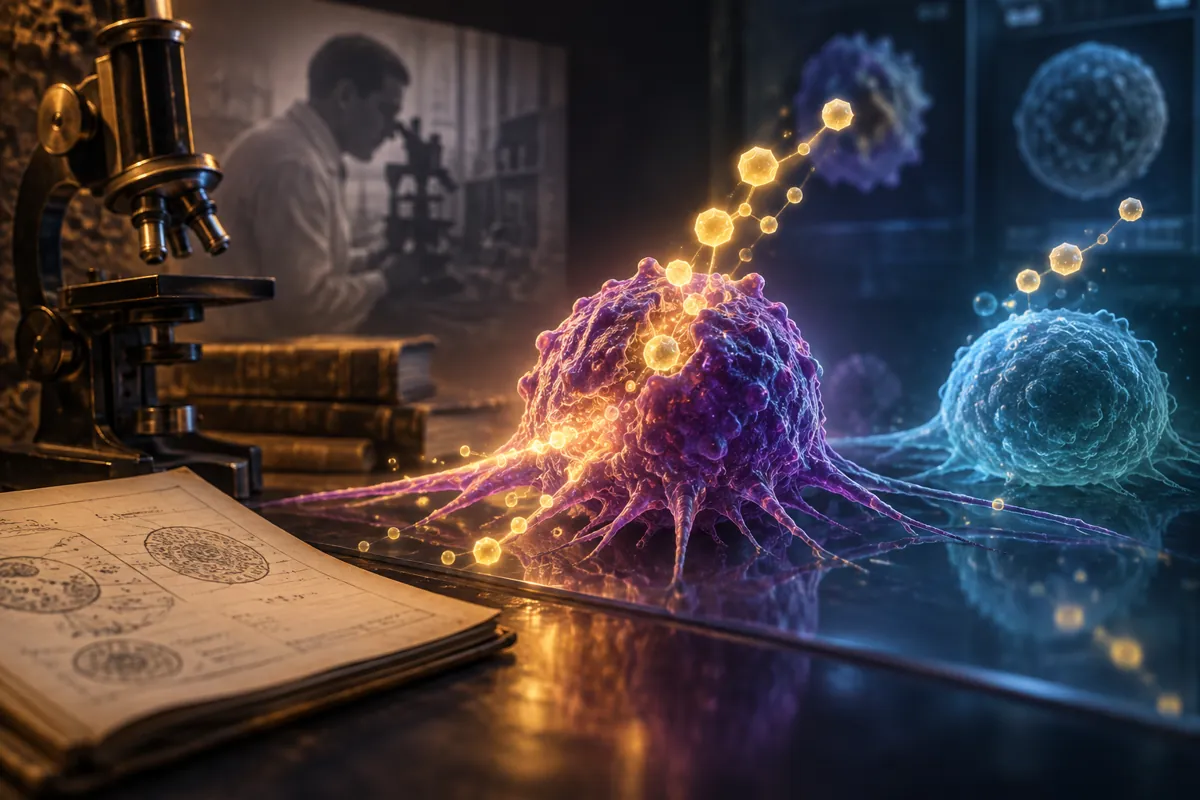
Warburg observed that cancer cells tend to break down most incoming glucose through a less efficient pathway called glycolysis even when oxygen is plentiful. Glycolysis converts glucose to lactate instead of entering the mitochondria. This became known as the “Warburg Effect” of aerobic glycolysis.
To Warburg, this abnormal preference for “fermentation” despite sufficient oxygen indicated cancer cell mitochondria must be damaged in some way, forcing reliance on glycolysis. However, some discounted his theory due to insufficient evidence of actual mitochondrial defects. The observation nevertheless opened up intriguing new avenues in understanding cancer metabolism.
Warburg’s Extraordinary Survival Under Nazi Rule
In the 1930s, the rise of the Nazi party in Germany created immense peril for Jewish scientists like Warburg. He defiantly resisted Nazi interference and refused repeated calls from colleagues to flee Germany, determined not to abandon his prestigious institute.
Remarkably, Warburg survived World War 2 without being arrested, although the reasons for his unusual protection remain unclear. Some historians argue his prominence allowed the Nazis to use him as propaganda to counter claims they drove away top scientists. There is even some indication Hitler himself followed Warburg’s case and permitted him to continue his cancer research during the war.
The Neglect and Revival of Cancer Metabolism
In 1931, Warburg won the Nobel Prize for separate work elucidating details around cellular respiration enzymes. However, his cancer theories were starting to be more heavily criticized by the 1950s and 1960s. The discovery of DNA and oncogenes redirected cancer research to genetics and molecular biology for the next several decades.
Without supportive evidence, Warburg’s ideas were increasingly dismissed by younger researchers. By the 1990s textbooks scarcely mentioned the Warburg Effect or cancer cell metabolism. However, in the late 90s, some scientists noticed connections between cancer rates and metabolic disorders.
Research by Eugene Fine at Albert Einstein College of Medicine and others began shifting focus to pathways linking insulin resistance and irregular IGF signaling to cancer proliferation. They found tumors orchestrating metabolic changes through some of the same mechanisms as obesity and diabetes. This prompted a re-examination of whether Warburg’s metabolic perspective deserved more merit.
The Cell Growth vs. Mitochondria Damage Debate
Much recent debate around the Warburg Effect has centered on whether damaged mitochondria necessarily precede and trigger the metabolic shift as he contended. An alternative view suggests proliferating cancer cells fundamentally reprogram metabolism to rapidly incorporate more glucose and other nutrients needed for raw materials and energy.
In this model, mitochondrial downshifts may occur, but are secondary effects of oncogenic signals driving excessive anabolism and replication rather than primary causal damage setting events in motion. Scientists like Craig Thompson emphasize both respiration and glycolysis appear active in many cancer cells, indicating intact mitochondrial function.
However, experts like Thomas Seyfried counter that the preponderance of evidence still points to initial mitochondrial injury as the prime instigator. Both camps generally agree microenvironment factors later reinforce metabolic reprogramming as tumors outgrow blood supplies.
Resolving this debate has implications for therapeutic approaches targeting mitochondria versus growth signaling pathways and glucose transport. But when it comes to prevention, there is increasing agreement on reducing obesity, insulin resistance, inflammation and oxidative stress.
Connecting Epidemiology to Metabolism
Rising rates of cancer and metabolic diseases coincide over the 20th century, suggesting large -scale societal changes in diet and lifestyles likely fuel both trends. This is reinforced by data on immigrant groups rapidly adopting Western lifestyles also exhibiting sharp increases in cancers uncommon in native countries.
High insulin levels stand out as a common denominator and plausible driver in the interconnected conditions of overnutrition, diabetes, and many cancers. Evidence indicates insulin stimulates tumor growth and inhibits apoptosis. Moreover, hyperinsulinemia is implicated in earlier menarche, later menopause, and disrupted menstrual cycles—all factors linked to higher female reproductive cancers.
To observers like Warburg in the early 20th century, surging cancer incidence itself pointed to some broader environmental cause beyond bad luck or genetics. Layers of epidemiology have only strengthened indications modern diets and lifestyles foster cancer development alongside other non-communicable metabolic disorders.
Opportunities for Prevention
The metabolic view suggests new avenues to prevent or control cancers, such as:
- Low carbohydrate diets to curb excess insulin secretion
- Intermittent fasting and time-restricted feeding to allow insulin to normalize
- Metformin and other insulin-reducing therapies
- Exercise regimens that improve insulin sensitivity
- Stress reduction techniques that influence metabolic hormones
- Ketogenic diets to preferentially nourish cells with fats rather than glucose
In addition to their potential for slowing growth, metabolic approaches may also bolster therapies like chemotherapy and radiation under optimized conditions where malignant cells struggle without abundant glucose. However, more human research is still needed.
While the intricacies of cancer biology still challenge researchers, the expanding view of cancer’s deep metabolic connections supports rethinking prevention opportunities based on lifestyle choices within our grasp today.
Conclusion
Otto Warburg’s pioneering observations opened the door to understanding cancer as a metabolic disorder and not just a genetic disease. After decades of neglect, appreciation is again growing for how abnormalities in glucose, insulin, inflammation, and related signals manifest in cancer’s workings—knowledge that may yet help turn the tide against a dreaded enigma Warburg dedicated his career trying to solve.