 PRADEEP ALBERT
The journal
The article library
Explore Dr. Albert’s writing on longevity, regenerative medicine, health, and emerging research.
427 articles. Showing 361 to 384, page 16 of 18.
Cardiovascular Health ·
Re-evaluating Lean Mass Hyperresponders: assessing cardiovascular risks and potential benefits
Defining the phenotype of lean mass hyperresponders A subset group of people following very low-carb, ketogenic diets are seeing dramatic increases in LDL cholesterol and LDL particle levels. Termed “lean mass hyperresponders,” these individuals tend to be very athletic with high lean mass and are metabolically flexible. In addition to increased LDL cholesterol, they also…
Read article
Cancer ·
Advancing the Frontier: The Accelerating Pace of Progress Against Cancer
The Limits of Conventional Cancer Therapies For decades, the mainstay treatments for cancer have been chemotherapy, radiation, and surgery. While these modalities saw early successes against some blood cancers like lymphoma and leukemia, their efficacy against solid tumor cancers has remained limited over the past 40 years. Chemotherapy drugs target rapidly dividing cells, helping explain…
Read article
Cardiovascular Health ·
Rethinking Heart Health: Challenging the Coronary Calcium Score
The Limitations of the CAC Test The coronary artery calcium (CAC) score is a common screening tool used to assess heart disease risk. It is measured using a CT scan to detect calcification in the coronary arteries. Many have come to rely on the CAC score as an infallible indicator – a CAC score of…
Read article
Cancer ·
Harnessing the Metabolic Power of Ketogenic Diets to Fight Cancer
The Rationale Behind Using Ketosis to Starve Cancer Cells Cancer cells have a fundamentally altered metabolism that drives their unchecked growth. Unlike healthy cells, cancer cells become heavily dependent on glucose to fuel rapid division. This phenomenon, known as the Warburg Effect, offers a metabolic pathway to target cancer. By severely restricting carbohydrate intake, ketogenic…
Read article
Cancer ·
Revolutionizing Medical Imaging With Cutting-Edge MRI Technology
Overview of Medical Imaging Techniques Medical imaging encompasses various techniques that provide crucial anatomical and functional information to diagnose disease. Common modalities include X-rays, CT scans, ultrasound, nuclear medicine studies like PET scans, and MRI. X-rays use ionizing radiation to create images based on tissue density. Denser tissues like bone absorb more radiation and appear…
Read article
General Health ·
The Far-Reaching Impacts of Sleep on Health and Wellbeing
Insufficient Sleep Drives Metabolic Dysfunction and Obesity Sleep loss profoundly disrupts metabolic regulation in ways that drive insulin resistance, glucose intolerance, appetite dysregulation, food cravings, increased caloric intake, and heightened obesity and diabetes risk. Detailed discussion focused on illuminating the intricate mechanisms relating to pancreatic function, insulin signaling pathways, appetite hormones leptin and ghrelin, and…
Read article
Emerging Therapies and Research ·
Unraveling the Mysteries of Mitochondria and Their Role in Aging and Disease
The Remarkable Evolutionary Origin Story of the Mitochondria Mitochondria, the "powerhouses" of our cells, have a fascinating backstory. Around 1.5 billion years ago, an ancient bacterium was engulfed by another single-celled organism in an event called endosymbiosis. Rather than digesting the bacterium, the host cell harnessed its ability to produce energy. Over time, most of…
Read article
Emerging Therapies and Research ·
Turning Back the Clock: The Quest to Reverse Aging at the Cellular Level
The Loss of Cellular Identity Drives Aging According to Harvard geneticist David Sinclair, aging occurs due to a loss of information within our cells over time. This erosion of fidelity causes cells to lose their identity and function. He relates this to pioneering information theorist Claude Shannon's concept of information loss occurring during transmission of…
Read article
Cancer ·
Rethinking Cancer as a Metabolic Disease
The Minority View of Cancer's Origins The traditional view of cancer is that it arises primarily from genetic mutations. However, Dr. Thomas Seyfried, a professor of biology at Boston College, holds a minority perspective that cancer is fundamentally a disease of defective cellular respiration and mitochondrial dysfunction rather than genetic abnormalities. In his view, while…
Read article
Autoimmune Conditions ·
A Lifetime Approach: Effective Naturopathic Management of Arthritis
Oxidative Stress: An Under-Addressed Arthritis Mediator While acute inflammation rightfully captures attention as a driver of arthritis, oxidative stress acts as an insidious perpetrator as well. Localized reactive oxygen species and systemic reduction of antioxidants associate with both severity and duration of rheumatoid arthritis. Osteoarthritis also demonstrates increased oxidative stress markers. Functional medicine pioneer Dr.…
Read article
Cardiovascular Health ·
The Far-Reaching Impacts of Sleep on Health and Disease
Funding to Support Trusted Health Content Many popular health podcasts rely on advertising revenue, which can introduce conflicts of interest regarding the products and services promoted. To avoid this issue and maintain trust with listeners, some podcast creators have adopted alternative funding models based on voluntary listener support. In exchange for subscriber payments, podcast creators…
Read article
Emerging Therapies and Research ·
Unraveling the Mysteries of Mitochondria: From Energetics to Signaling Roles
The Genesis of Mitochondrial Research Modern mitochondrial research traces back to several pivotal discoveries in the 20th century. In 1937, German biochemist Hans Krebs outlined how mitochondria metabolize nutrients through the TCA cycle to generate energy carriers like NADH. In 1960, British biologist Peter Mitchell solved how mitochondria synthesize ATP through oxidative phosphorylation using the…
Read article
Digestive and Gut Health ·
Uncovering the Hidden Causes of Recurrent GI Distress
The Gut-Brain Connection The gut and brain have a powerful, bidirectional relationship. Stress and emotions can clearly impact gastrointestinal function. However, the opposite effect also holds true – gastrointestinal issues can directly affect mood, anxiety levels, cognition, and energy. For example, conditions like small intestinal bacterial overgrowth (SIBO) and hiatal hernia syndrome allow bacterial byproducts…
Read article
Functional and Integrative Medicine ·
Assessing Metabolic Health Beyond Standard Metrics
Defining Metabolic Syndrome In the 1980s, endocrinologist Dr. Gerald Reaven observed that a cluster of clinical signs tended to appear together in patients and strongly predicted their risk for cardiovascular disease, cancer, and neurodegenerative diseases. Dr. Reaven referred to this cluster as "Syndrome X." Over time, this terminology evolved into what we now call metabolic…
Read article
Emerging Therapies and Research ·
Demystifying Scientific Studies: A Guide to Reading and Interpreting Medical Research
The Scientific Process and Types of Studies Before a scientific study even begins, researchers start by forming a hypothesis about a particular relationship between variables. From there, they design experiments to test that hypothesis, get approval from ethics committees, determine the number of human or animal subjects needed, outline key outcomes to measure, plan statistical…
Read article
Emerging Therapies and Research ·
Unlocking the Genetic Secrets Behind Rare and Complex Diseases
The Rapid Pace of Advancement in Genetic Technologies It's astonishing to reflect on how quickly genetic testing technologies have advanced over a relatively short period of time. Just a few decades ago, identifying disease-causing genes was an arduous process that could take years. Now, thanks to innovations like high-throughput sequencing, we can sequence a person's…
Read article
Men's Health ·
Improving Men's Sexual Health and Function
The Prevalence and Impact of Erectile Dysfunction Over half of men over 40 suffer from some degree of erectile dysfunction (ED). As men age, the prevalence increases – 40% at 40 years old, 50% at 50 years old, 60% at 60 years old, and 70% at 70 years old. This extremely common issue can significantly…
Read article
Cardiovascular Health ·
Understanding Blood Pressure: Definitions, Risks, and How to Optimize Yours
What is Blood Pressure and How is it Measured? Blood pressure refers to the force that blood exerts on the walls of arteries as it is pumped from the heart throughout the body. It has two components – systolic and diastolic pressure. Systolic pressure represents the pressure in the arteries when the heart contracts and…
Read article
Emerging Therapies and Research ·
Ketamine: A Novel Antidepressant With Promise and Caution
The Origins and Effects of Ketamine Ketamine was originally synthesized in the 1960s as an anesthetic agent, valued for maintaining blood pressure and respiratory drive. However, clinicians soon noticed it could cause hallucinations and "out-of-body" sensations. While concerning, these psychedelic properties led researchers in the 2000s to explore ketamine as a rapid-acting antidepressant. In the…
Read article
Exercise and Longevity ·
How Exercise Extends Lifespan and Boosts Healthspan
The Mortality Benefits of an Active Lifestyle Exercise provides a remarkable array of health benefits that can significantly extend lifespan and improve quality of life into old age. Epidemiological studies consistently show that physically active people have around a 50% lower risk of mortality compared to their sedentary counterparts. This translates to 3-5 additional years…
Read article
Emerging Therapies and Research ·
Hacking Metabolism: New Insights into Optimizing Cellular Health
The Frontiers of Metabolomics Research Metabolism refers to the complex network of chemical reactions that convert food into energy and synthesize essential molecules in our bodies. The relatively new field of "metabolomics" aims to measure all of the metabolites and metabolic pathways operating in a cell, tissue, or organism. Key topics in metabolomics include: Studying…
Read article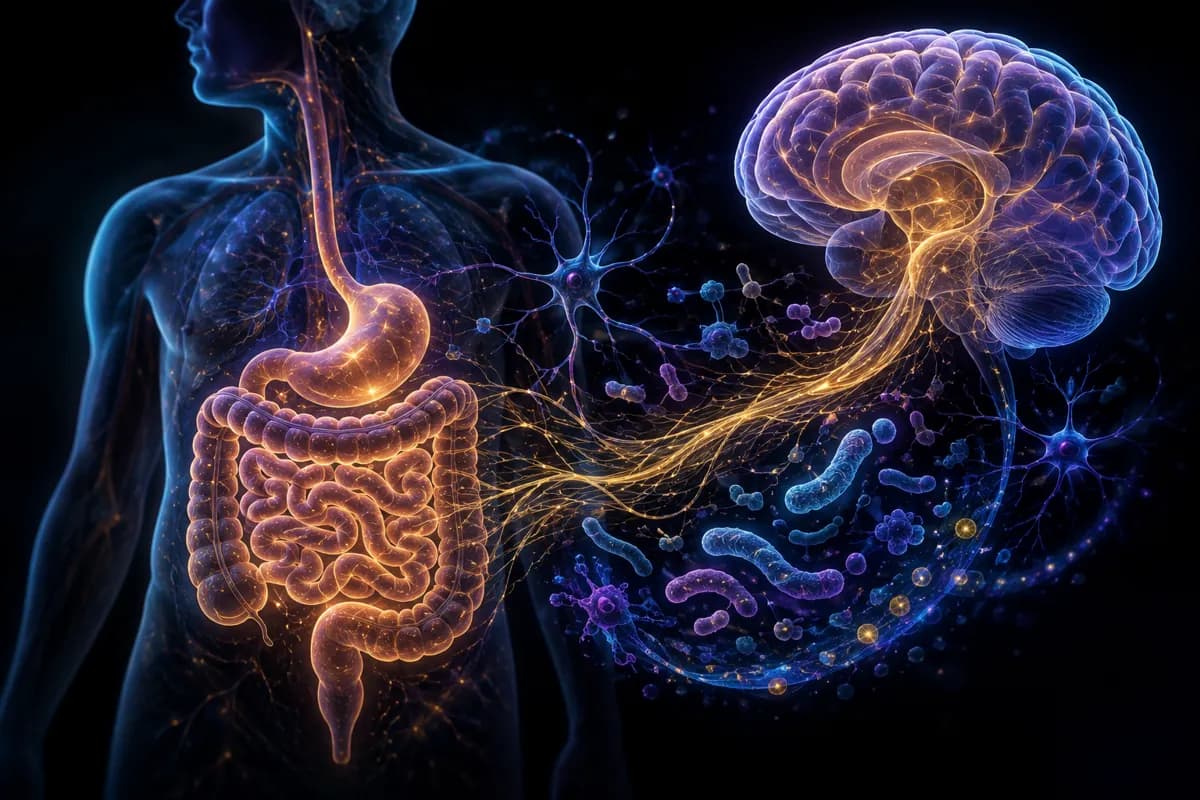
Digestive and Gut Health ·
The Intricate Connection Between the Gut and Brain
Understanding the Complex Embryology and Anatomy of the Gastrointestinal System The gastrointestinal (GI) system develops from a flat disc in an embryo that folds to create a tube, which eventually forms the gut from mouth to anus. This intricate tube has a lining called the mucosa, with the next layer being connective tissue, followed by…
Read article
Lifestyle and Wellness ·
A Path to Emotional Balance: Understanding Dialectical Behavior Therapy
The Origins of DBT Dialectical Behavior Therapy (DBT) was developed in the 1970s and 80s by psychologist Dr. Marsha Linehan, who struggled with severe mental health issues herself as a teenager. DBT builds on the techniques of Cognitive Behavioral Therapy (CBT) by incorporating a focus on dialectics – recognizing inherent tensions and seeking balance between…
Read article
General Health ·
Maintaining Healthy Bones Across the Lifespan
Why Bone Health Matters Strong, healthy bones provide the foundation for our physical structure and mobility. However, many people do not prioritize bone health until they experience issues later in life, like osteoporosis or fractures from falls. Focusing on building and maintaining bone strength early in life can help prevent these problems. Bones act as…
Read articlePage 16 of 18